

Sound Isolation and STC (Sound Transmission Class)
Posted by Auralex on 21st Jan 2026
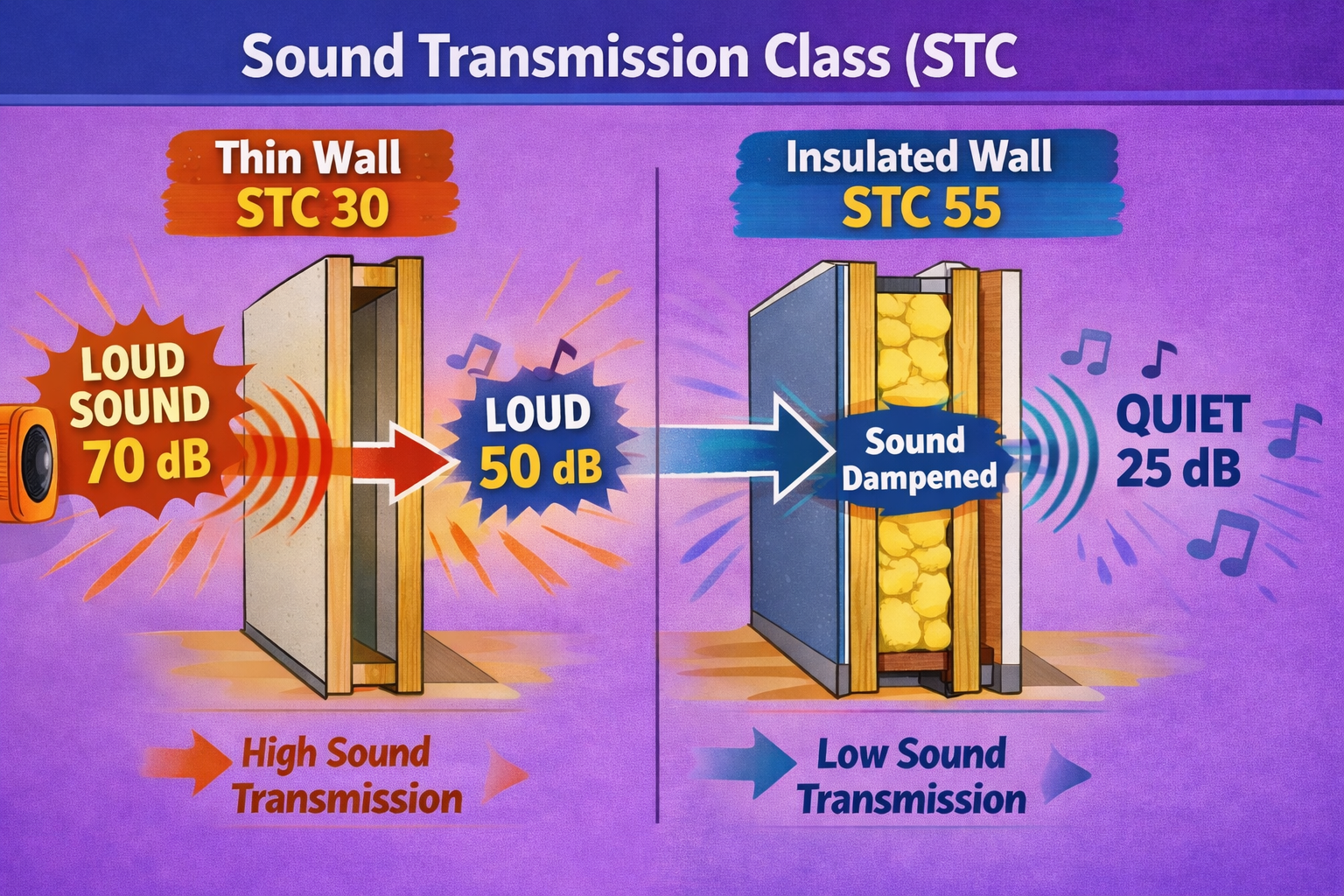
STC (Sound Transmission Class) is a single rating number of how effectively a material or partition is at reducing airborne sound transmission between spaces. For example, ½” drywall has an SCT of 28.
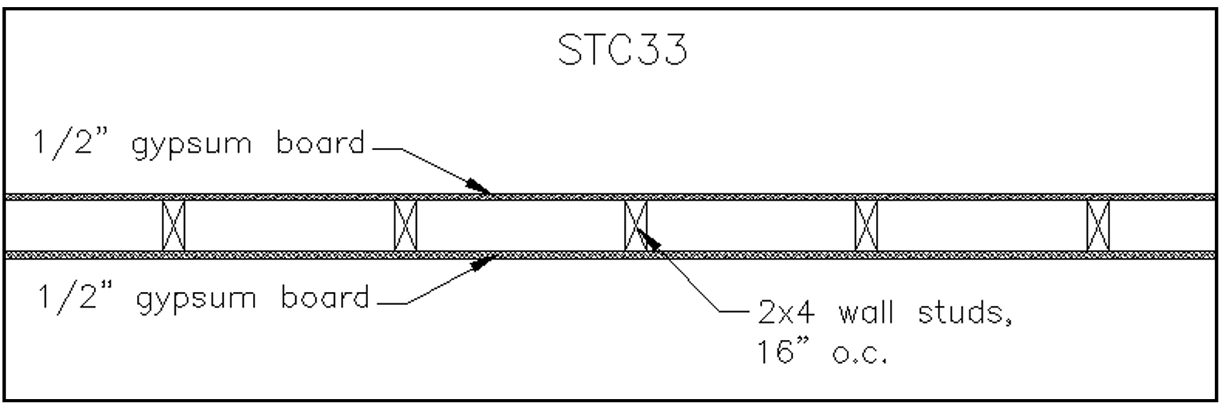
The average commercial or residential room is constructed of ½” drywall and metal or wood 2”x4” studs and does not have internal wall insulation. This structure has an STC of 33.
Sound Transmission Class (STC)
What it measures
- STC applies to things like walls, doors, floors, ceilings, and windows
- It measures how much airborne sound (speech, TV, music) is blocked
- It does not measure impact noise (footsteps, vibration) or low-frequency bass very well
How the number works
- STC is measured in a lab by testing how much sound is lost as it passes through a partition
- The result is expressed as a single number—higher is better
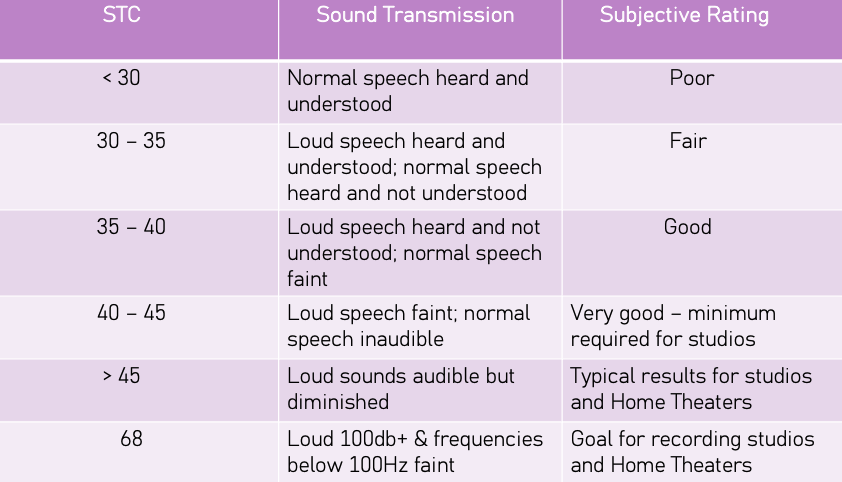
- Rough guideline:
- STC 25 – Normal speech easily understood
- STC 30 – Loud speech understood
- STC 35 – Loud speech audible but not intelligible
- STC 40 – Loud speech barely audible
- STC 45–50 – Speech generally not heard
- STC 55+ – Very good sound isolation (studios, high-end construction)
What STC does not tell you
- It downplays low-frequency sound (subwoofers, drums, traffic rumble)
- It assumes perfect construction—real-world performance is often lower due to:
- Gaps, cracks, or poor sealing
- Flanking paths (sound traveling around walls)
- For footsteps and structure-borne noise, IIC (Impact Insulation Class) is used. IIC is a measure of how well a floor-ceiling system blocks impact sounds, like footsteps or dropped items from your upstairs neighbors. One way it's measured is with a tapping machine. A standardized hammer taps the floor, and a measurement is taken in the room below.
Why STC matters
- Architects and builders use STC to compare wall and floor assemblies
- Studio designers use it as a baseline, but rely on more detailed data for isolation
- Higher STC generally means better privacy and noise control
Quick examples
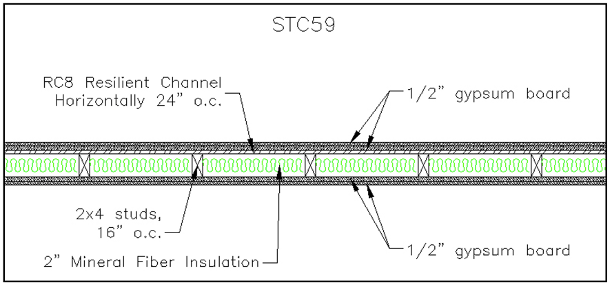
- A single-stud wall with Mineral Fiber or EcoCell insulation and RC8 Resilient Channel: STC ~59+
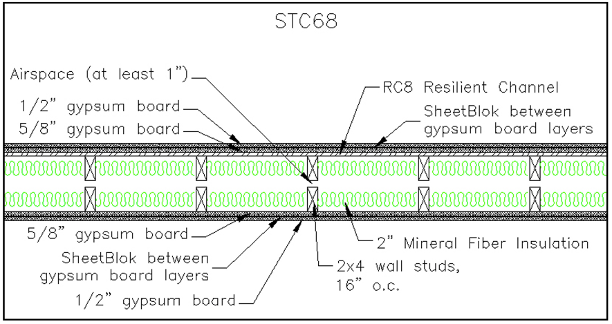
- A double-stud or staggered-stud wall with Airspace, Mineral Fiber or EcoCell insulation, SheetBlok and RC-8 Resilient Channel: STC ~68+
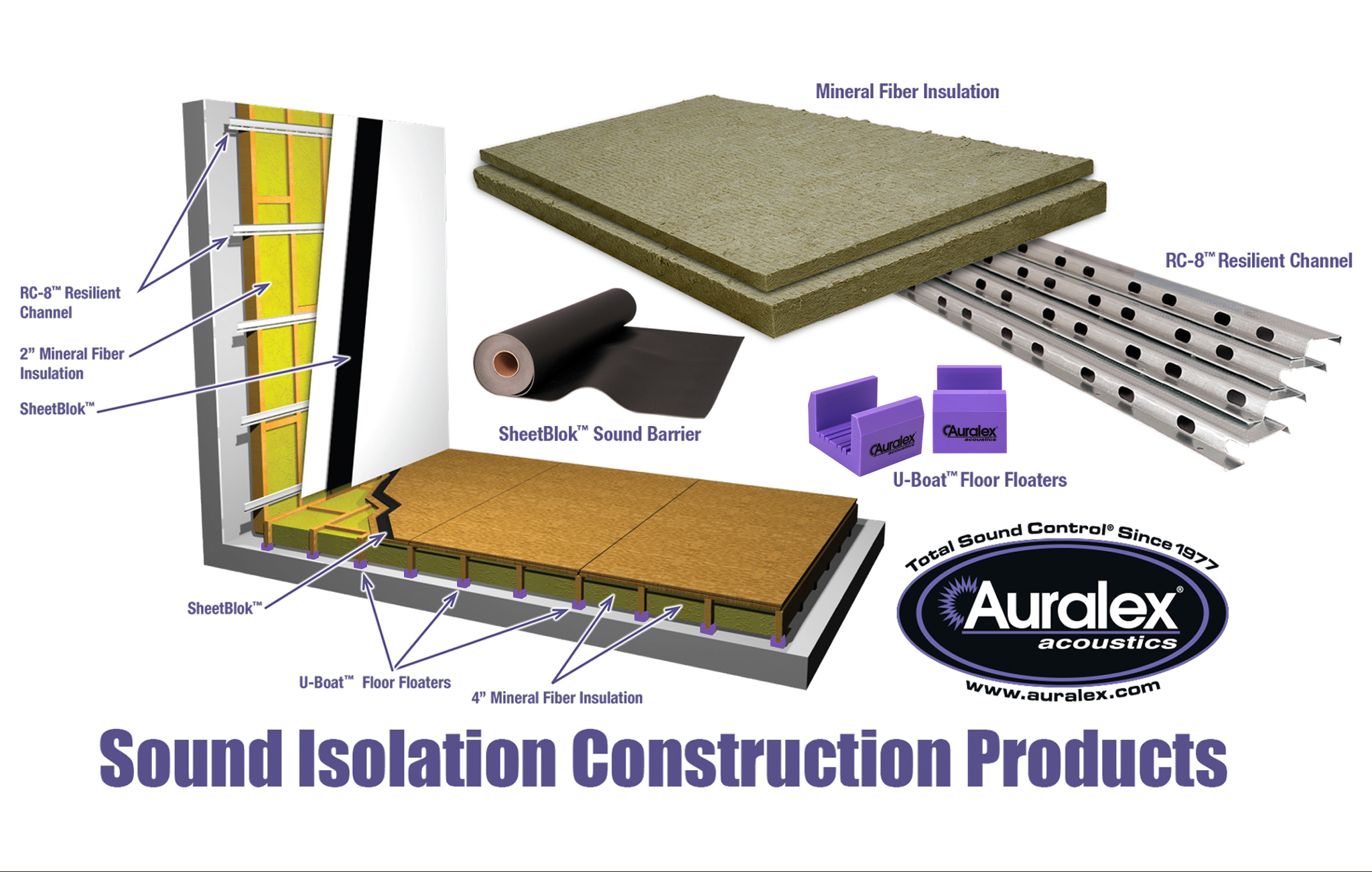
Need to build a "room within a room" for better sound isolation?
Check out this Auralex video!